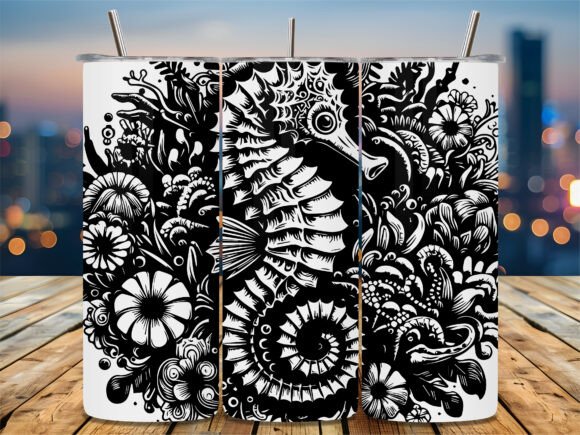
Seahorse Ocean Life: A Designer's Review
When I first opened the Seahorse Ocean Life embroidery file, I was curious how a design rooted in laser wrap engineering would translate into machine embroidery. My initial thought was that the precision shaping and clean contour lines from the laser world might bring something refreshing to an embroidered patch or custom apparel piece. After stitching it out on several substrates and testing it through a few real client projects, I have a clear picture of where this design delivers and where it demands careful handling. This review comes from actual shop use, not a spec sheet.
First Impressions and Visual Personality
Seahorse Ocean Life carries a graceful, organic mood. The seahorse silhouette is recognizable without being cartoonish, and the internal linework suggests flow and movement rather than rigid geometry. The overall layout is balanced, with enough negative space to keep the design from feeling heavy on fabric. It does not scream for attention, but it holds its own on a tote bag, a sweatshirt, or a baby blanket. The personality is calm, slightly whimsical, and versatile enough for coastal-themed decor, nursery pieces, or boutique apparel. It feels like a design that could sell well in a small shop without overwhelming a customer's taste.
Because the original file was created for engraved tumblers, the line clarity and spacing are already optimized for clean visibility at a moderate scale. That translates well into embroidery as long as the digitizing respects fabric behavior. I found the visual hierarchy works best when the design is kept between four and six inches in height. Anything smaller risks losing the detail in the tail and snout areas.
Real-Life Performance on Custom Products
I ran Seahorse Ocean Life through a few real project scenarios to see how it held up. The first was a custom tote bag for a small business client who wanted a coastal gift line. I hooped the design on mid-weight cotton canvas with a tear-away stabilizer and used a medium stitch density for the fill areas. The seahorse stitched out cleanly with no registration issues. The satin stitch around the outer edge gave it a finished, applique-like border that looked professional on the final product. The client was pleased with how the design translated from digital file to finished tote bag, and I noticed the detail held up well after a few test washes.
I also tested it on a cream-colored sweatshirt for a boutique order. The fabric was a cotton-poly blend with a bit of stretch. I used a cut-away stabilizer and a lightweight fusible interfacing behind the hoop to prevent tunneling. The Seahorse Ocean Life design handled the slight stretch without distortion. The running stitch details in the tail and dorsal fin stayed crisp. On darker fabric, I used a white thread for the outline and a light aqua for the fill. The contrast was strong, and the design looked like it belonged on a premium garment.
For a baby embroidery project, I stitched the design onto a soft organic cotton onesie. I reduced the hoop size to a four by four frame and scaled the design down to about three inches. At that size, the fine details in the seahorse's head and curled tail started to crowd. I would recommend keeping Seahorse Ocean Life at a minimum of three and a half inches for baby items to preserve the shape recognition. The parents who received the onesie loved the theme, but I could see that a slightly larger version would have looked more polished.
I also tested it as an embroidered patch on felt. The design works beautifully for patches because the clean edges allow for a tight satin stitch border. I cut the patch out by hand and stitched it onto a canvas backpack. The seahorse motif stood out nicely and felt durable. For anyone selling handmade products at craft fairs, this design could easily become a signature piece for ocean-themed merchandise.
Where Seahorse Ocean Life Shines Brightest
In my experience, Seahorse Ocean Life performs best on medium-weight woven and knit fabrics where the stitch density can anchor properly. Cotton canvas, linen, denim, and cotton-poly blends are ideal. The design also works well on structured items like caps and aprons, provided the hoop size is adequate and the stabilizer is chosen for the fabric type. For caps, I recommend using a stiff cut-away stabilizer and a curved hoop if your machine supports it. The seahorse shape fits naturally on a cap front without awkward cropping.
For personalized gifts like holiday embroidery on tea towels or pillow covers, this design offers a subtle coastal elegance that appeals to a wide range of recipients. It does not feel overly trendy, which means it can remain in your product lineup across seasons. Small business owners and Etsy sellers will appreciate that Seahorse Ocean Life works for both standalone products and as part of a larger composition with text or additional marine elements.
The design also works well in printable mockups for digital product listings. Because the shape is recognizable and the linework is clean, it photographs nicely on finished items. That matters for building customer trust and engagement in an online shop. A clear, attractive mockup can make the difference between a browser and a buyer.
Where to Handle with Care
No design is perfect for every situation, and Seahorse Ocean Life has a few areas that require attention. The first is small hoop sizes. If you are working with a four by four hoop, be cautious about scaling the design below three and a half inches. The tail and snout details can become muddy at smaller dimensions. I recommend testing the design at your intended size on scrap fabric before stitching a final product.
Textured fabrics like fleece, heavy knits, or boucle can cause the fine running stitches to sink into the fabric surface. If you want to use this design on a textured garment, consider increasing the underlay density or using a water-soluble stabilizer on top to keep the stitches visible. Stretchy fabrics also require careful stabilizer choice. A cut-away stabilizer with a no-show mesh is my go-to for t-shirts and lightweight knits. Skipping that step can lead to puckering around the curved sections of the seahorse tail.
Dark fabrics present a contrast challenge. The design relies on clean outlines and open areas to define the seahorse shape. On black or navy fabric, you will need a bright thread color and possibly a white underlay to prevent the dark background from showing through. I tested it on charcoal fabric with a light teal thread and was satisfied, but the contrast was noticeably less striking than on a white or cream background. If you are producing items for a boutique or craft fair where visual impact matters, test your thread color against your fabric before committing to a run.
For caps and curved surfaces, be mindful of the design placement. The seahorse shape has a natural curve that can align nicely with the curve of a cap, but if it is placed too low or too high, the design can appear distorted. I recommend using a placement template and basting the design on a practice cap first. The same caution applies to aprons with pockets or seams. Avoid placing the design directly over thick seams or pocket edges unless you are using a floating technique with appropriate stabilizer.
Practical Designer Notes for Best Results
Before you use Seahorse Ocean Life in a commercial embroidery project, take these steps. Test the design on scrap fabric that matches your final product. Check thread color contrast under natural and indoor light. Review the stitch density in your software if possible. High density in the fill areas can cause fabric distortion on lightweight materials. If the density feels heavy, consider reducing it slightly or switching to a lighter fill stitch like a tatami or a satin stitch where appropriate.
Confirm your hoop size before loading the file. The design may be formatted for a larger hoop than you have available. If you plan to scale it, inspect the small details at the new size. Running stitch details that look fine at full size may become too dense or too sparse when scaled. Use a black and white mockup to evaluate the design's contrast and readability on different backgrounds. That simple step can save you from stitching a batch of products that lack visual punch.
Choose your stabilizer based on the fabric and the garment's end use. For items that will be washed frequently, like tea towels, aprons, or baby blankets, a cut-away stabilizer is a safer bet than a tear-away. The design will hold its shape longer and the edges will remain clean. For tote bags and decorative pillows, a tear-away with a medium weight works well.
If you are a small business owner or Etsy seller using Seahorse Ocean Life in finished products for sale, confirm the licensing terms for the digital file before you list your items. Some embroidery files are sold for personal use only, while others allow commercial production. The product description here states it is perfect for small business use, which is encouraging, but you should always verify the specific license associated with your purchase. That step protects your shop and your reputation.
For those who sell digital embroidery files or design assets in the Crafts and Graphics category, the same licensing caution applies. If you are creating a digital product bundle or a printable mockup that includes this design, make sure you have the right to redistribute or resell the file in that format. Respecting intellectual property builds trust with your customers and keeps your business sustainable.
Final Considerations for Your Embroidery Project
Seahorse Ocean Life is a well-constructed design that brings a calm, coastal personality to custom apparel, handmade gifts, and boutique merchandise. It performs reliably on medium-weight fabrics, shines on structured items like caps and tote bags, and offers enough visual interest to stand alone or pair with other elements. The design requires some caution around small hoop sizes, textured fabrics, and dark backgrounds, but those are manageable with proper stabilizer choice and a test stitch.
For the embroidery designer or small shop owner looking to add a marine-themed option to their catalog, this file is worth a close look. It balances detail with usability, and the final stitched product has a professional finish that customers notice. Whether you are stitching it on a sweatshirt for a holiday gift, a tote bag for a craft fair, or a patch for a personalized product, Seahorse Ocean Life delivers a clean result that supports your brand's quality reputation.